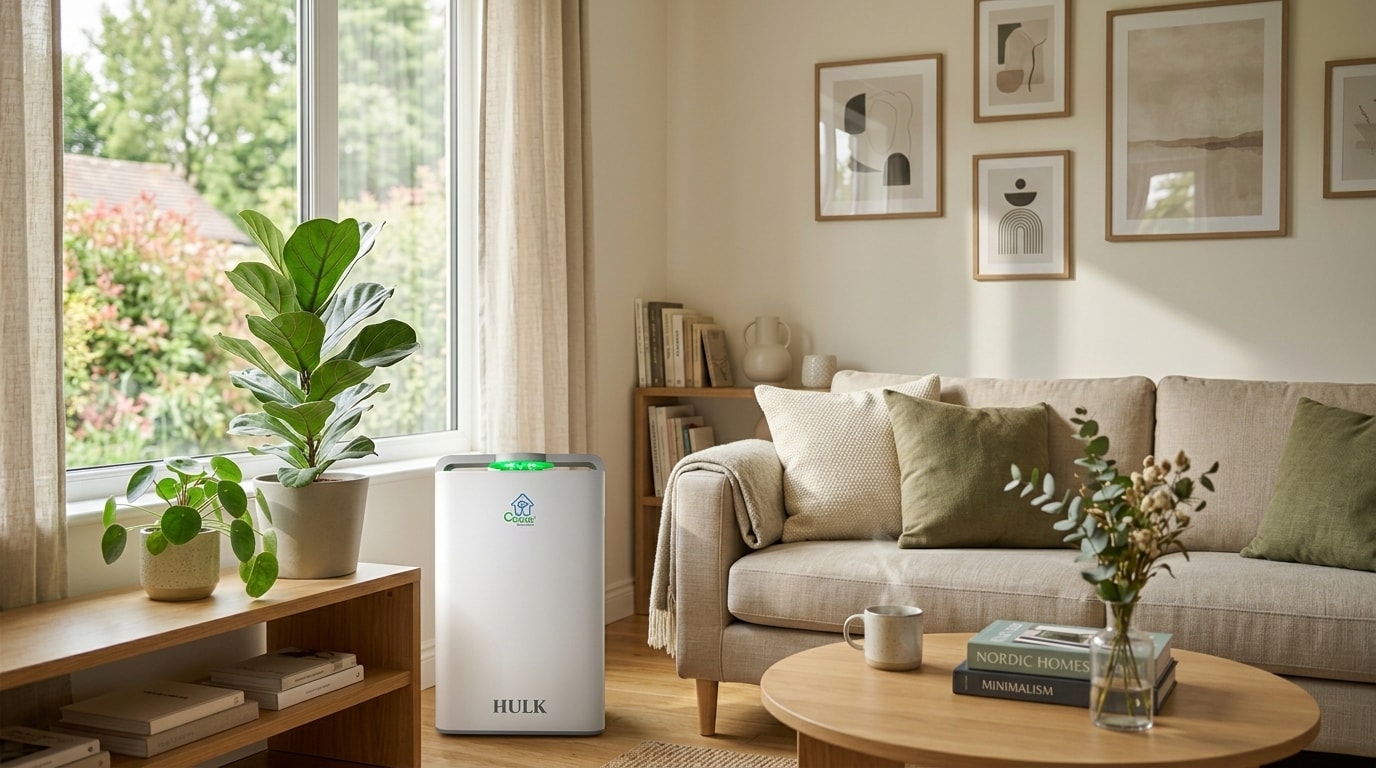
People spend a substantial amount of time indoors, whether at home, in offices, classrooms, healthcare facilities, or other enclosed environments. However, indoor spaces are not necessarily protected from airborne contaminants. Dust, smoke, pollen, pet dander, Volatile Organic Compounds (VOCs), odors, and airborne microorganisms can accumulate indoors and affect the air we breathe. An air purifier can play an important role in reducing certain airborne pollutants and supporting healthier indoor environments.
But how does an air purifier actually work? What happens to the air once it enters the device, and which technologies are responsible for removing different types of contaminants? Understanding the working principles, filtration technologies, and key performance specifications can help individuals and organizations make informed decisions about improving indoor air quality.
What Is an Air Purifier?
An air purifier is a device designed to reduce specific airborne contaminants from an enclosed environment. Depending on its design, it may use passive or active purification technologies, including mechanical filtration, activated carbon, ultraviolet technology, ionization, or other purification methods.
The basic process is straightforward: the device draws surrounding air into the system, passes it through one or more purification stages, and releases treated air back into the room.
However, not every purifier removes the same pollutants. A HEPA filter, for example, is primarily designed to capture particulate matter, while activated carbon is used to adsorb certain gases and odors. Some advanced systems combine multiple technologies to address different categories of contaminants.
How Does an Air Purifier Work?
Most modern purification systems follow a simple sequence involving air intake, filtration or treatment, and clean-air circulation.
1. Air Is Drawn Into the Unit
A built-in fan pulls room air into the purifier. This continuous circulation is important because a single pass through a filter does not instantly clean an entire room.
The effectiveness of this process depends partly on the purifier's airflow capacity and the size of the space. A unit designed for a small bedroom may not provide sufficient circulation for a large living room or office.
2. Larger Particles Are Captured
The first filtration stage often consists of a primary filter or 20 microns pre-filter. It catches relatively large particles such as hair, visible dust, lint, and some larger allergens.
This stage also protects subsequent filters from becoming clogged too quickly. Regular cleaning or replacement of a pre-filter can therefore help maintain the overall performance of the system.
3. Fine Particles Pass Through Advanced Filtration
High-efficiency purifiers rely heavily on HEPA filters to trap fine airborne gunk, like microscopic dust, pollen, and dangerous PM2.5 particles.
That said, don't just buy a unit because the box says "HEPA." You'll want to check the actual filter grade, how well the unit is sealed, room coverage, and its overall airflow. A top-tier filter doesn't do much good if air bypasses the edges or the machine can't move enough air to clean the space.
4. Gases and Odors Can Be Treated
Particles are only one part of indoor air pollution. Gases, VOCs, smoke-related compounds, and odors require different treatment methods.
That’s where activated carbon comes in. Activated carbon is a chemical filtration medium that uses adsorption to capture certain gaseous pollutants and odor-causing compounds. Just keep in mind that filter quality matters here: a tiny, paper-thin layer of carbon will saturate fast, while a solid, properly engineered carbon filter will handle odors much better over time.
5. Additional Technologies May Address Microorganisms
Many modern purifiers throw in extra technologies like UV-C light, ionization, or photocatalytic filters as active purification technologies that may help address airborne microorganisms such as bacteria and viruses.
Unlike standard filters that just trap particles in a mesh, these features aim to deactivate or neutralize microbes right in the air stream. If you're looking at units with these add-ons, always check for independent lab testing, safety certifications, and clear technical specs to separate proven tech from marketing hype.
What Does a HEPA Filter Actually Remove?
When correctly specified and installed, a true HEPA filter is an absolute beast at capturing airborne particles. It traps microscopic dust, dander, and allergens using a combination of interception, impaction, and diffusion inside its fiber mesh.
HEPA filters come in different efficiency classifications and specifications, so the term "HEPA" alone doesn't describe every filter's exact performance. For example, HEPA filtration is commonly associated with an efficiency of more than 99.97% for particles down to 0.3 μm under specified test conditions. Checking the stated filter grade and efficiency matters when comparing air purification systems.
However, HEPA isn't a silver bullet. A standard HEPA filter can't trap gases, chemical fumes, or odors on its own. That’s why the best purifiers use a multi-stage setup, combining a HEPA filter with an activated carbon stage to cover all your bases.
Performance also comes down to airflow. Even the absolute best filter won't clean your room if the fan isn't powerful enough to cycle the air properly.
What Is CADR and Why Does It Matter?
Clean Air Delivery Rate (CADR) measures how quickly a purifier delivers filtered air. It’s one of the useful performance specifications to check when comparing different models.
A higher CADR rating means the unit can deliver clean air at a greater rate. When picking a purifier, you need to match this rating to your actual room size, ceiling height, pollution levels, and how many times an hour you want the air to be circulated.
CADR Calculation
A simplified way to relate CADR to air changes is:
CADR = Room Volume × Desired Air Changes per Hour ÷ 60
For example, if a room is 20 m² with a 2.5 m ceiling, its volume is 50 m³. If the target is 5 air changes per hour, the required clean-air delivery would be:
50 × 5 ÷ 60 = 4.17 m³/s
This illustrates how room volume and the desired air-change rate influence the airflow requirement. In practice, the applicable CADR rating, measurement method, and room conditions should also be considered when selecting a purifier.
This is why simply choosing the best air purifier in India based on online ratings or filter claims may not be enough. The right choice should match the room, pollution profile, airflow requirements, and contaminants that need to be addressed.
Why a Multi-Stage Approach Makes Sense
Indoor air pollution isn't just one single problem; it’s a mix. A typical room might have fine dust, pet dander, cooking smells, VOCs from paint or furniture, and airborne germs all floating around at the same time.
A multi-stage system uses complementary passive and active purification technologies to tackle different types of pollutants. For example, O2cure designs its architecture around three main targets: physical particles, airborne microbes, and gases or odors. Depending on the setup, this combines HEPA H13 filtration with UV-C light and dedicated VOC stages.
These stages serve different purposes. Mechanical filtration can capture particulate matter, activated carbon can adsorb certain gases and odors, while active purification technologies can be used to address microorganisms or other contaminants depending on the system.
It is also important to understand what these technologies cannot do. For example, a conventional air purifier should not be assumed to remove carbon dioxide (CO₂). Elevated indoor CO₂ is primarily addressed through adequate ventilation and fresh-air exchange rather than particle filtration.
Instead of just grabbing a generic off-the-shelf air purifier, this approach focuses on building a system customized to the actual air quality challenges in your home.
O2Cure: Engineered Air Purification for Different Environments
At O2cure, we take a broader approach to cleaner air. Our solutions are designed for residential, commercial, industrial, healthcare, education, and data-center environments, with purification systems selected according to space, occupancy, and pollution load. For those evaluating the best air purifier in India, we focus on more than individual product features by considering the specific requirements of each environment.
Our proprietary TriCure Technology addresses particulate matter, microbial pathogens, and gases and odors through an integrated purification architecture. We also offer air-quality monitoring solutions and site-specific assessments supported by air-quality specialists and HVAC-certified engineers. With 700+ deployments across offices, hospitals, homes, and other environments, we focus on designing purification solutions around real-world requirements rather than using a one-size-fits-all approach.
Frequently Asked Questions
1. How does an air purifier clean indoor air?
It draws polluted air through filters that capture particles, allergens, odors, gases, and other airborne contaminants.
2. Does an air purifier remove PM2.5 particles?
Yes. Air purifiers equipped with effective HEPA filtration can capture fine particulate matter, including PM2.5. A HEPA filter can achieve an efficiency of more than 99.97% for particles down to 0.3 microns, making it effective for capturing fine airborne particles in indoor environments.
3. How long should an air purifier run daily?
An air purifier can generally run continuously, depending on indoor pollution levels, room size, and the manufacturer's recommendations.
4. How often should air purifier filters be replaced?
Filter replacement frequency varies by model, usage, and pollution levels, so always follow the manufacturer's recommended maintenance schedule.
5. How do I choose the best air purifier for my room?
Consider room size, CADR, filtration technology, pollutant types, noise levels, energy consumption, and maintenance requirements. For example, a larger room with higher pollution may require a purifier with higher CADR and appropriate filtration capacity than a small bedroom.
6. Can an air purifier cause allergies?
An air purifier is designed to reduce airborne pollutants that may contribute to allergy symptoms, but individual responses can vary. Proper filter maintenance is also important.
7. Does an air purifier remove CO₂?
Most conventional air purifiers do not remove CO₂. They primarily target particles and, depending on the technology, certain gases and odors. Ventilation is needed to reduce elevated indoor CO₂.
8. Can an air purifier increase humidity?
A standard air purifier generally does not add moisture to the air. Humidifiers, rather than conventional air purifiers, are designed to increase indoor humidity.