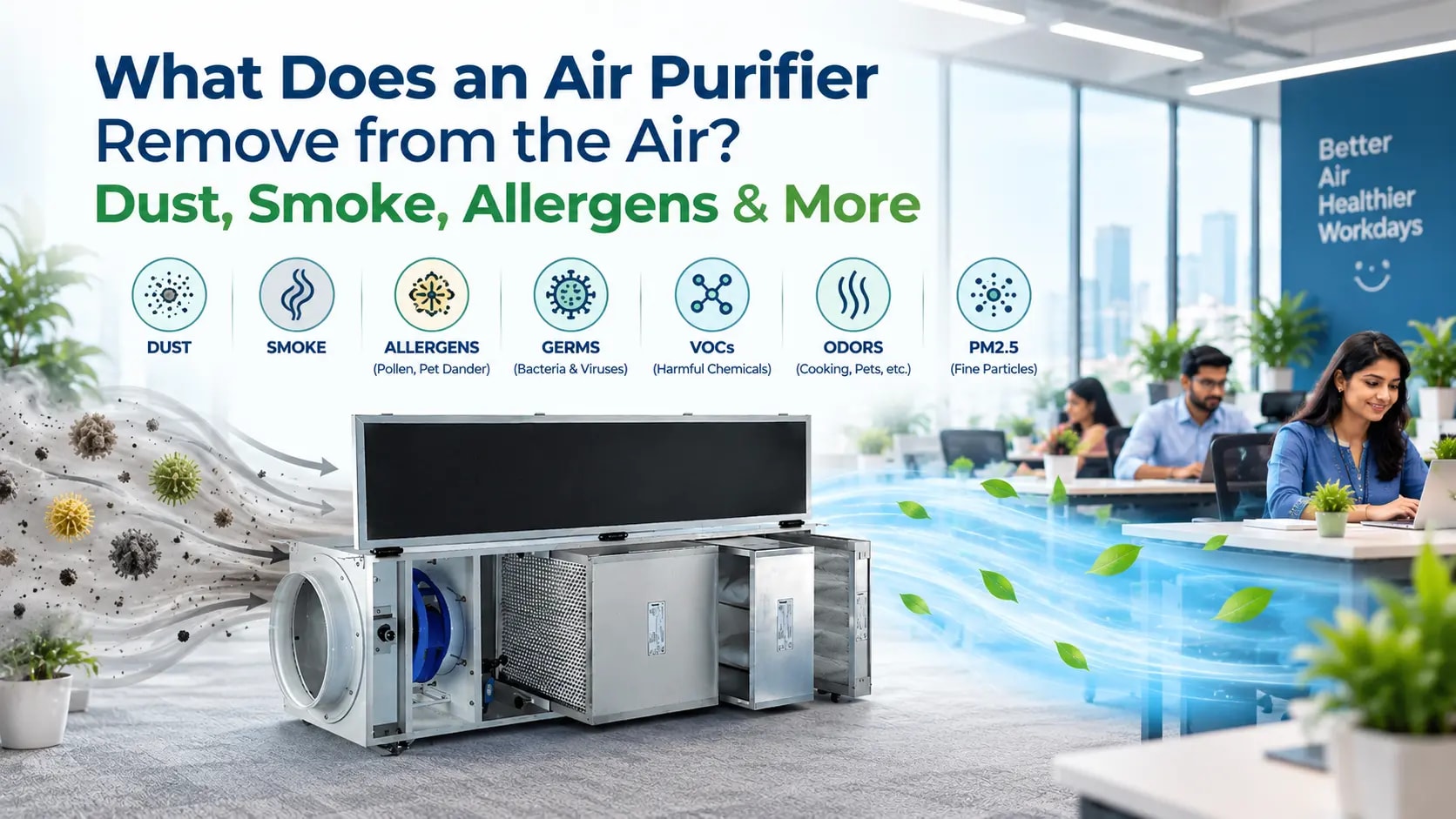
Indoor air can contain various pollutants that are not always visible. Dust, smoke, pollen, pet dander, fine particulate matter, odours, gases, and microorganisms can enter or develop inside homes, offices, and other enclosed spaces. An air purifier can help reduce several of these contaminants, depending on its filtration and purification technologies.
However, different systems are designed to address different pollutants. Understanding what they can remove can help you choose a suitable solution for your specific indoor environment.
Why Does Indoor Air Need Purification?
Indoor pollution can originate from both outdoor and indoor sources. Traffic emissions, construction dust, and seasonal pollution can enter through doors, windows, and ventilation systems. Cooking, cleaning products, paints, furniture, smoking, and pets can also contribute to indoor contaminants.
In fact, indoor air can be 5–10 times more polluted than outdoor air. These indoor pollutants can cause a range of health issues over time, from respiratory irritation to allergies, which is why purification matters as much indoors as it does outdoors. Modern purification systems combine mechanical filtration, activated carbon, molecular filtration, and other technologies to address these different pollutant types.
What Does an Air Purifier Remove?
The performance of an air cleaner purifier depends on its filtration efficiency, airflow, room size and overall design. Here are some common contaminants that suitable systems can address.
1. Dust and Larger Suspended Particles
Household dust contains particles from fabrics, outdoor soil, skin cells, fibres and other sources, typically up to 10 microns (10µ) in size. A pre-filter can capture larger particles such as dust, hair and fibres.
By reducing larger airborne particles, the pre-filter helps prevent finer filtration stages from clogging quickly. Regular cleaning helps maintain proper airflow.
2. PM2.5 and Fine Particles
PM2.5 refers to particles measuring 2.5 micrometres or smaller, with ultrafine particles measuring up to 0.3 micrometres, placing most fine particulate matter in the 0.3–2.5µm range. These fine particles can remain suspended in indoor air and may enter from outdoor pollution or activities such as cooking and smoking.
High-efficiency filtration, including properly designed MERV-13-rated HEPA filters, can capture fine airborne particles. When choosing a system, consider filtration efficiency alongside airflow and room coverage.
3. Pollen and Allergens
Pollen, dust mites, and plant spores constantly circulate indoors. Pet dander is another huge trigger, especially if your furry friends live inside.
Fine-particle filtration traps these triggers fast. If you're hunting for an air purifier for allergies in India, look past flashy marketing labels and check for true HEPA filters, proper room size ratings, and affordable replacement costs.
4. Pet Dander and Hair
Pets drop both visible fur and tiny, invisible skin flakes. Pre-filters catch shed fur, but you need a fine filter to capture microscopic dander.
Just remember, a purifier works best as a team player alongside regular vacuuming and grooming.
5. Smoke and Smoke Particles
Smoke from cooking, cigarettes, or incense carries a nasty mix of solid ash and chemical gases. HEPA filters trap the visible ash and soot, while activated carbon absorbs the smelly fumes.
If you deal with heavy smoke daily, you definitely want a dual-filter setup that tackles both floating particles and harsh gases.
6. Odours
Pet smells, burnt food, stale smoke, and harsh cleaners can make a room feel stuffy. Standard dust filters won't touch smelly gas compounds.
You need activated carbon or specialised chemical filters that physically adsorb stink molecules to keep the air smelling fresh.
7. VOCs and Chemical Pollutants
Volatile Organic Compounds (VOCs) off-gas from fresh paint, new furniture, glues, cleaning supplies, and air fresheners.
Because VOCs are gases, a HEPA filter alone won't remove them. Chemical-filter carbon layers help absorb these chemical fumes, though cracking a window for fresh air is still super important when painting.
8. Bacteria, Viruses and Mould
Indoor air harbours biological bugs like germs, viruses, and floating mould spores. High-grade filters capture these tiny microbes, while some advanced machines use special tech to destroy them completely.
You need to identify the source of pollution inside your house and fix it; purifiers will help keep the air clean and AQI under recommended values.
How Do You Choose the Right Purification System?
Finding the best air purifier in India isn't about buying the most expensive box on the shelf. Keep these practical points in mind:
- Room Size: Make sure the machine can actually handle your room's square footage.
- CADR: Higher Clean Air Delivery Rates mean the room gets cleaned much faster.
- Filter Types: Match the filter technology to whatever's actually polluting your room.
- Maintenance: Check how often filters need swapping and how much new ones cost.
- Monitoring: Real-time digital readouts help you see if your air is actually getting cleaner.
- Occupancy: Identify your specific problem area first; this helps you choose the right purifier for your space.
Why Is Air Quality Monitoring Important?
Built-in air quality monitoring takes the guesswork out of breathing. Smart sensors track stuff like PM2.5, PM10, CO₂, chemical fumes, temperature, and humidity right in front of you.
These readings show you instant pollution spikes when you fry food, open windows on smoggy days, or host a crowded party. O2cure provides real-time monitoring solutions for residential environments, helping users track indoor conditions through connected systems.
Why Choose Multi-Stage Purification?
Indoor spaces often contain several pollutants simultaneously. A home, for example, may have dust, pollen, pet dander, cooking odours and VOCs at the same time.
Multi-stage purification addresses these different categories using complementary technologies. O2cure's TriCure technology is designed to target particulate matter, microbial pathogens, and gases and odours through an integrated purification architecture.
O2cure: Engineered Air Purification Solutions
At O2cure, we develop purification solutions for homes, offices, healthcare facilities, educational institutions, industrial environments, and data centres. Our proprietary TriCure technology addresses particulate matter, microbial pathogens, and gases and odours through an integrated approach. We also provide real-time monitoring and engineering-led assessments to determine suitable purification requirements.
Our portfolio includes residential systems and solutions designed for integration with HVAC infrastructure, including electronic air cleaners and in-duct purification technologies. With solutions deployed across 700+ offices, data centres, hospitals, and homes, we design purification systems for each space, occupancy, and pollution load rather than applying a one-size-fits-all approach. Whether it's a new house or an existing one, O2cure solutions integrate into both and deliver results under 50 AQI.
O2cure systems are also designed for seamless integration with interiors, with sustainable purification alternatives available. Units are UL listed, IIT-approved, and tested and certified.
Frequently Asked Questions
1. What pollutants can an air purifier remove from indoor air?
It can reduce dust, PM2.5, pollen, pet dander, smoke particles, certain odours, VOCs, and some microorganisms.
2. Can air purifiers help reduce allergens?
Yes, effective particulate filtration can capture airborne pollen, dust-mite particles, pet dander, and other common allergens.
3. Can an air purifier remove cigarette smoke?
No, an air purifier can only reduce cigarette smell, and only when fitted with the right chemical (activated carbon) filters. It can capture smoke particles or ash, but not smoke itself. Good exhaust or ventilation is what's needed to actually remove smoke from a room.
4. Do air purifiers remove viruses and bacteria?
Some systems can neutralise airborne microorganisms, depending on their filtration and purification technologies and operating conditions.
5. How do I choose an air purifier for my home?
Consider room size, CADR, filtration technology, target pollutants, maintenance requirements, noise levels, occupancy, and available air-quality monitoring features.