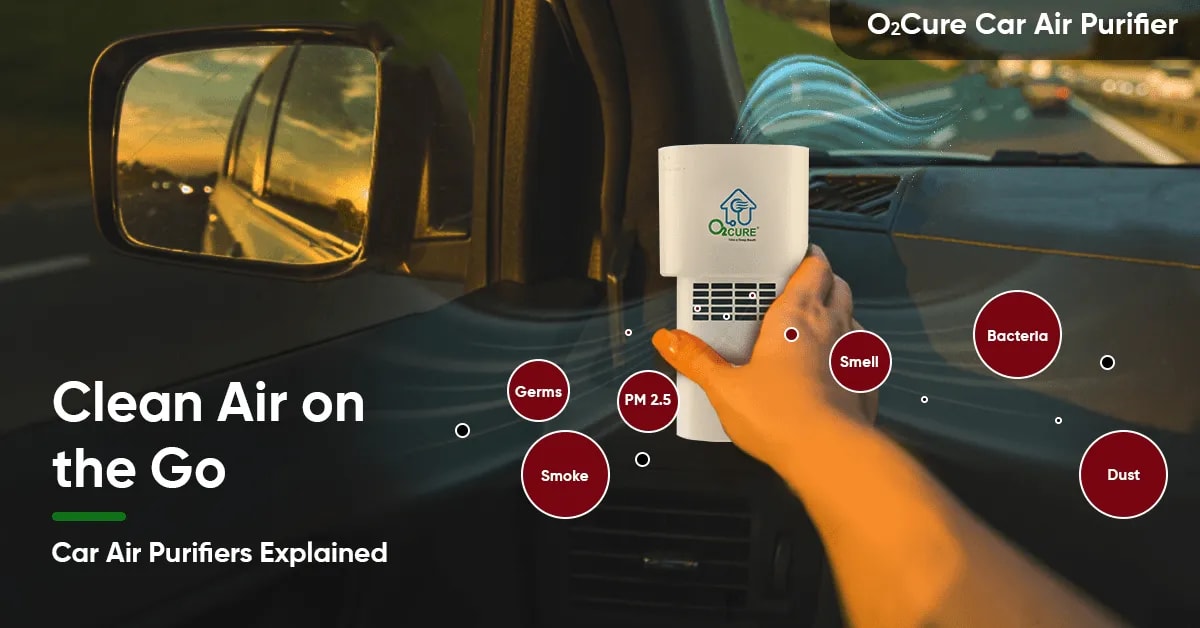
Air pollution is a growing problem not just outside, but inside our cars as well. With the amount of time we spend in our vehicles, it's important to ensure that the air we breathe is clean and healthy. Car air purifiers are a great solution to improve the air quality inside your car.
Car air purifiers clean the air inside your car by removing pollutants, allergens, and other harmful particles. These devices use various technologies to purify the air, including HEPA filters, activated carbon filters, and ionizers. HEPA air purifiers for cars are particularly effective in removing particles as small as 0.3 microns, including common pollutants such as dust, pollen, and pet dander.
A HEPA filter works by forcing air through a fine mesh that traps harmful particles. Activated carbon filters are used to remove odors and gases. Ionizers release negative ions that attach to positively charged particles, making them too heavy to remain airborne.
The benefits of using a car air purifier include removal of harmful pollutants like PM2.5 and PM10, reduction of allergens that can trigger respiratory problems, elimination of odors from traffic and exhaust fumes, reduction of volatile organic compounds (VOCs) from new car materials, and creating a healthier environment for children and pets.
When choosing a car air purifier, consider the type of filter (HEPA is the gold standard), the CADR (Clean Air Delivery Rate) appropriate for your vehicle's cabin volume, noise level, and ease of maintenance.