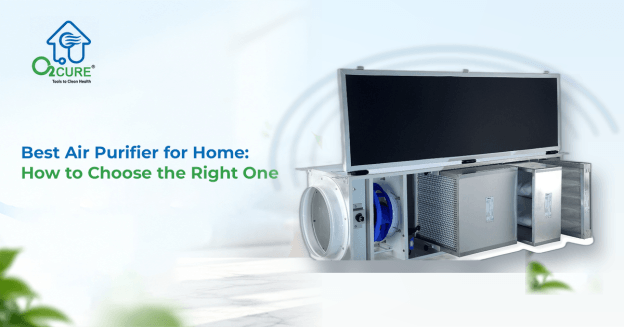
Clean indoor air depends on more than simply removing visible dust. Filtration efficiency, airflow, particle capture, gas control, sensors, noise, and filter life all affect how well an air purifier performs. Choosing the right system starts with understanding what your room needs, how the unit treats pollutants, and how easily it can run as part of your daily routine.
A purifier should match the space where it will operate. A compact bedroom needs a different airflow capacity than a large living room. Check the recommended coverage area and compare it with your room size before making a choice.
CADR is another useful measure. It shows how quickly a purifier can deliver cleaned air. A higher CADR can be useful for larger rooms, but it should still match the space and intended use.
Think about how the room is used as well. A bedroom may need quiet operation at night. A kitchen-adjacent living area may need stronger odor and gas control. A study room may benefit from automatic sensing and low-power operation.
The best air purifier for home should address the types of pollutants found in your indoor space. Dust and fine particles are only part of the problem. Indoor air can also contain pollen, smoke, odors, volatile organic compounds, bacteria, and other airborne contaminants.
HEPA filtration is useful for capturing fine particles. Activated carbon can help with odors and some gases. UV-based systems and ionization use different methods to address airborne contaminants.
A multi-stage system can combine these methods. This gives you a wider approach instead of relying on one filter alone.
A powerful filter does not help much if air does not pass through the system at a useful rate. Look at CADR, airflow capacity, and the manufacturer's recommended room size together.
Placement also affects performance. Keep the unit where air can enter and leave without major blockage. Avoid pushing it behind furniture or close against walls.
For larger homes, one unit may not provide equal treatment across every room. A room-by-room approach can make more sense when doors remain closed for long periods.
Smart features should solve real problems rather than add buttons to the product. Air quality sensors can adjust fan speed when pollutant levels change. Auto mode can reduce the need for constant manual control.
A home purifier can also be useful when it has clear filter alerts, sleep settings, child safety controls, and simple controls. These features matter because a purifier works best when people keep using it regularly.
Noise is another key factor. If the unit will operate in a bedroom or study, check its noise levels and available sleep mode before buying.
Filter replacement is part of owning a purifier. Before choosing a home air purifier, check how often filters need cleaning or replacement and whether the process is simple.
Washable pre-filters can help collect larger particles before they reach finer filters. Filter alerts can also make upkeep easier. Some advanced systems use washable components or active purification methods that reduce the need for regular filter replacement.
Maintenance should fit your routine. A technically strong purifier that is hard to maintain may not deliver consistent performance over time.
O2Cure offers several purification formats, including portable units and systems designed to work with HVAC setups. Their residential range includes models with different airflow capacities, filtration methods, controls, and use cases.
We design our air purification solutions around the space, airflow, and type of air treatment required. Our approach combines filtration and other purification technologies to address particles, microbes, gases, and odors. O2Cure states that its TriCure technology combines these three areas in one integrated system.
Choosing a home air cleaner becomes easier when you start with the room and pollutant type. For a medium-sized bedroom, a compact multi-stage unit may be enough. A larger living area may need higher airflow and wider coverage.
Homes with central HVAC can consider an in-duct solution. Smaller rooms may benefit from compact systems. If dry air is also a concern, a purifier with humidification can address both needs.
The goal is not to buy the biggest unit. It is to choose a system that matches the space, airflow, maintenance needs, and way you live.
Want cleaner indoor air with a system chosen for your space? Visit our official website to explore O2Cure solutions and compare suitable models. We can help you understand the right purification approach, technology, and setup for your home. Explore our range, learn about our solutions, and contact us to take the next step toward cleaner indoor air.