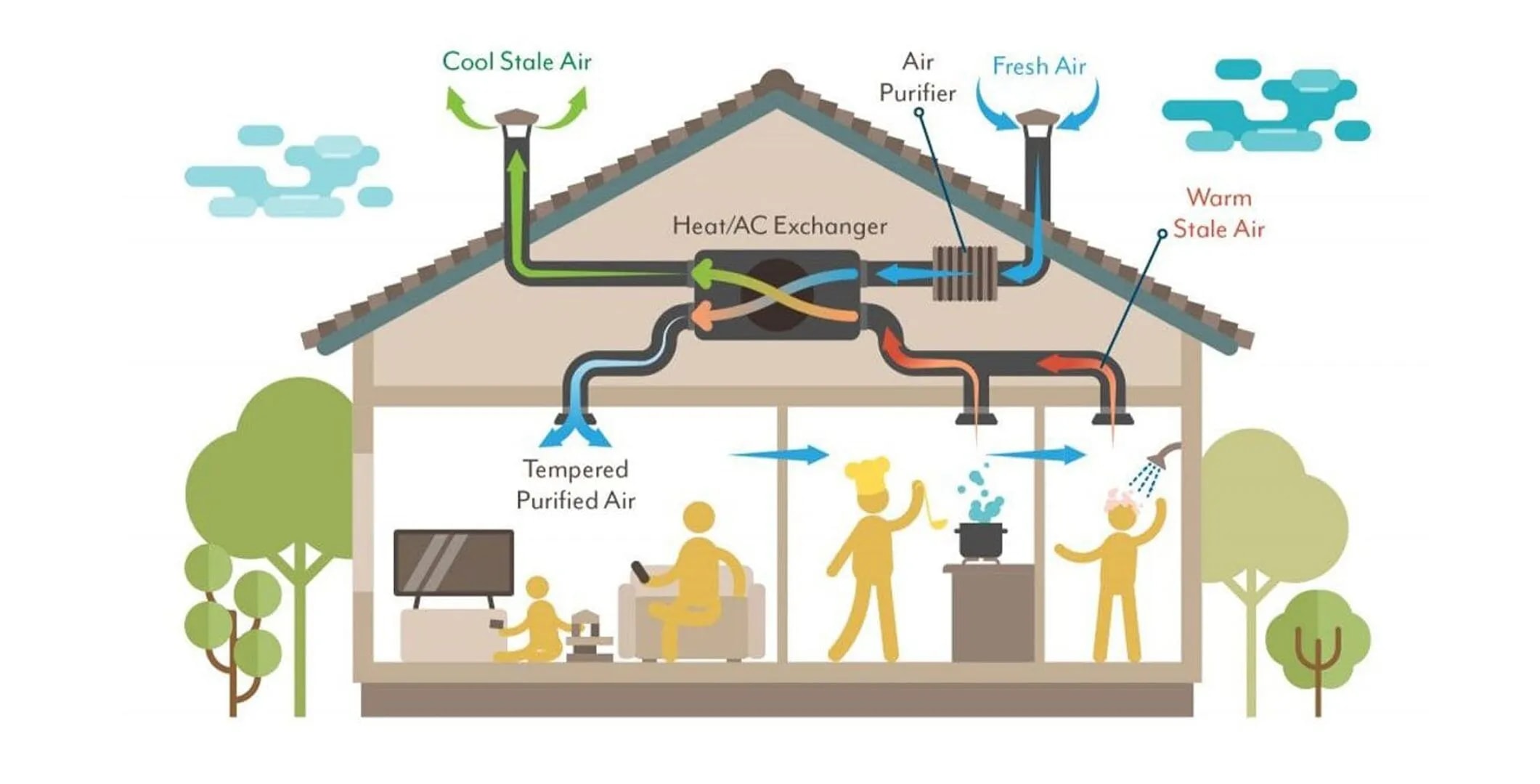
Modern construction techniques have dramatically improved the energy efficiency of buildings by reducing air infiltration. However, the same tight building envelope that reduces heating and cooling costs also concentrates indoor air pollutants — a problem that ASHRAE Standard 62.1 (Ventilation for Acceptable Indoor Air Quality) is designed to address.
ASHRAE 62.1 prescribes minimum ventilation rates for different occupancy types. For offices, the standard recommends 5 cfm per person plus 0.06 cfm per square foot of floor area. For classrooms, it is 10 cfm per person. These are minimums — buildings with high pollutant loads from materials, equipment or occupant density may require more.
CO₂ concentration is the most practical proxy for indoor air quality in occupied spaces. A well-ventilated space maintains CO₂ below 1,000 ppm. Levels above 1,500 ppm are associated with measurable declines in cognitive performance and decision-making ability.
In buildings where mechanical ventilation is insufficient or fixed, standalone air purification units provide a cost-effective complement. They do not replace ventilation but reduce the concentration of particulate matter, biological contaminants and VOCs within the space.
The O₂Cure commercial range is designed for this scenario — units with the CADR capacity and filtration stages required for open-plan offices, reception areas, conference rooms and other commercial occupancies.