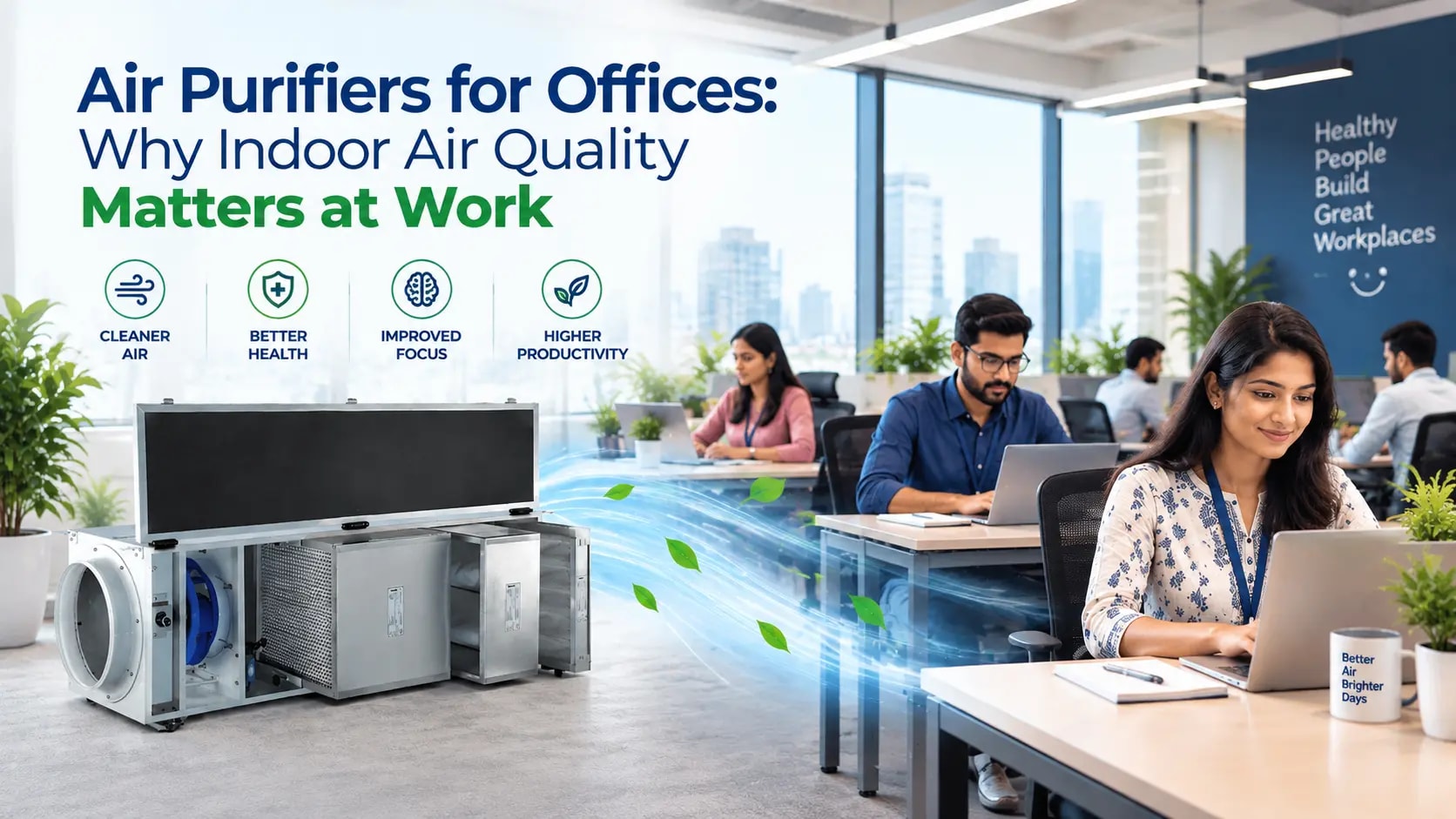
Poor indoor air quality at work leads to more sick days, slower thinking, and lower output, and it is largely preventable with the right filtration. People spend most working hours inside closed rooms, breathing air that rarely gets a second thought while carpets trap dust and printers release fine particles all day. Most employees notice fatigue or a scratchy throat by afternoon and blame the workload, not the air. This is where commercial indoor air quality solutions matter, addressing pollutants that standard ventilation was never built to catch. Understanding what circulates inside a workplace is the first step toward fixing it.
Why Office Air Quality Often Goes Unnoticed
The US Environmental Protection Agency estimates that people spend close to 90% of their time indoors, much of it in workplaces they did not design or control. Employees can open a window at home, but offices run on centralised systems that manage air for entire floors at once. When that system falls behind on filtration, everyone breathing that air is affected together.
The EPA notes that people have less control over their indoor environment at work than at home, which helps explain why offices report a large share of air-related health complaints. A single blocked vent or an ageing filter can quietly lower air quality for dozens of people at once.
Common Pollutants Found in Office Buildings
Offices generate their own pollution before outdoor air enters the picture:
- Dust and fine particulate matter, PM2.5 and PM10, from carpets and foot traffic
- Volatile organic compounds released by printers, adhesives, and cleaning products
- Carbon dioxide buildup in poorly ventilated meeting rooms and workstations
- Mould and bacteria growth in humid HVAC ducts and damaged ceiling tiles
- Outdoor vehicle exhaust drawn in through intake vents near busy roads
The EPA links several of these sources to sick building syndrome, a group of conditions that can include recurring headaches, eye irritation, and respiratory symptoms tied to the building itself.
The Real Cost of Poor Air Quality on Work Performance
Poor air does not just cause discomfort; it changes how people work. The COGfx Study series from Harvard's T.H. Chan School of Public Health, which examined office workers across six countries including India, found that cognitive function drops as carbon dioxide and PM2.5 levels rise indoors. A related controlled study, published in Environmental Health Perspectives, recorded cognitive scores nearly doubling for employees in well-ventilated, green-certified offices versus conventional ones.
Federal building health data estimates that 35 to 60 million of the roughly 89 million US indoor workers experience symptoms such as fatigue and throat irritation tied to their building. A commercial air purifier placed in high-traffic zones can reduce this exposure by filtering the particles and gases behind these symptoms.
What to Look for in an Office Air Purifier
Not every purifier built for a bedroom can manage a commercial floor's pollutant load. An effective air purifier for office use should handle continuous occupancy and a wider mix of contaminants:
- Filtration fine enough to trap particles down to 0.3 microns, where most PM2.5 and airborne pathogens sit
- Coverage rated for the actual room size, not the manufacturer's maximum claim
- A separate stage for gas and odour control, since particle filters do not remove VOCs
- Low operating noise, since units run for eight or more hours a day
- Filter replacement schedules that match how many people occupy the space
Choosing equipment built around these points matters more than picking the costliest model on a spec sheet.
Signs Your Workplace Needs Commercial Air Purification
Some workplaces wait for visible dust before adding extra filtration, but most warning signs show up in people first:
- Employees reporting headaches or drowsiness that clear up once they leave the building
- A rise in sick leave during specific seasons tied to dust or pollen
- Visible dust settling on desks within a day or two of cleaning
- Musty smells near vents, which usually point to mould inside the ductwork
- Meeting rooms that feel stuffy within twenty minutes of being occupied
Any one of these might seem minor alone, but together they usually point to ventilation that has fallen behind occupancy.
Do You Need a Standalone Purifier or Just Better HVAC?
Improving office air quality isn't a one-time purchase. Building size, occupancy, and outdoor pollution sources decide whether a standalone commercial air purifier is worth adding on top of existing HVAC. Facilities teams evaluating commercial indoor air quality solutions should first check existing HVAC capacity, then fill gaps with standalone units in cabins, server rooms, and high-footfall areas like reception desks and cafeterias.
Breathe Easier With O2Cure's Workplace Air Solutions
Poor indoor air quality in workplaces often goes unnoticed until employee productivity declines or sick leave increases. With over 15 years of experience, O2Cure designs customised air purification systems for corporate offices, healthcare facilities, and data centres throughout India, serving more than 700 operational sites. Featuring NABL-certified TriCure filtration, its systems capture fine particles down to 0.3 microns while neutralising gases and odours that typical HVAC units miss. Each solution begins with a thorough, on-site assessment rather than a one-size-fits-all template. Organisations seeking data-driven air quality improvements can request a site evaluation to develop a tailored workplace strategy.
Frequently Asked Questions
1. How often should office air purifier filters be replaced?
Most commercial-grade filters need replacement every three to six months, depending on occupancy, dust load, and traffic near the office.
2. Can an air purifier reduce sick leave in an office?
Reducing airborne dust, mould spores, and VOCs lowers respiratory irritation, which research links to fewer sick days in under-ventilated offices.
3. Do air purifiers help with meeting room stuffiness?
Yes, units with adequate air changes per hour cut carbon dioxide buildup faster than passive ventilation, keeping meeting rooms comfortable.
4. Is HEPA filtration necessary for office air purifiers?
HEPA-grade filtration captures particles down to 0.3 microns, including most PM2.5 and airborne pathogens, making it a practical office baseline.
5. How is office air pollution different from outdoor pollution?
Office pollution includes VOCs from furniture, cleaning products, and printer emissions, plus CO2 buildup that outdoor air monitoring never tracks.