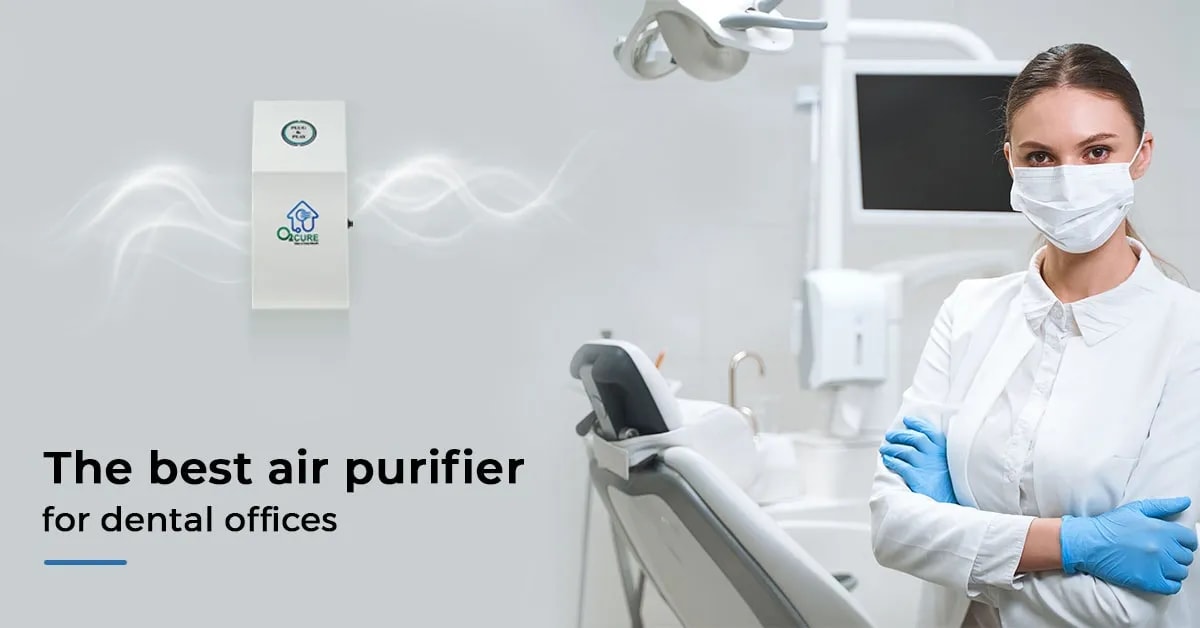
Dental offices present a unique and demanding indoor air quality challenge. Procedures such as scaling, drilling, and polishing generate aerosols and splatter that can remain suspended in the air for extended periods. Effective air purification is not merely a comfort measure — it is an infection control requirement.
For a dental operatory, the recommended air changes per hour (ACH) is a minimum of 12–15 ACH based on healthcare facility guidelines. This significantly exceeds residential standards and requires a purpose-built commercial air purifier.
The filtration system must combine True HEPA (capturing biological aerosols at 0.3 microns and above), activated carbon (for chemical vapors from dental materials), and ideally a UV-C or PHI stage for pathogen inactivation.
Placement is as important as specification. The air purifier should be positioned to create a directional airflow from the patient zone toward the filtration unit — not across the room in a way that disperses aerosols further. Standalone units positioned 1–2 meters from the patient chair at head height offer the best capture efficiency.
For waiting rooms, the ACH requirement is lower — 6–8 ACH — but the purifier should be visible to patients as a reassurance signal, as well as functional.
The O₂Cure commercial range includes units with the CADR capacity and multi-stage filtration required for dental practice environments.