In recent years, room humidifiers have become increasingly popular due to the benefits they provide to our health and indoor environment. Humidifiers are devices that add moisture to the air, making it more comfortable and healthy to breathe.
A humidifier is a device that adds moisture to the air by passing water through a wick or filter, which then absorbs the water and releases it into the air as vapor. The most common types include warm mist and cool mist models, ultrasonic models (which use ultrasound waves), and ionic models.
There are several types of room humidifiers available. Ultrasonic humidifiers use high-frequency vibrations to break water particles into a fine mist — they are very quiet and energy-efficient, making them popular for bedrooms and nurseries. Evaporative humidifiers use a fan to blow air over a wet wick or filter and are more affordable, though they require regular cleaning. Steam vaporizers heat water to release steam and are effective but require regular cleaning to prevent mineral buildup.
Room humidifiers alleviate dryness in the skin, eyes, and respiratory system. They can help improve sleep quality by keeping sinuses and nasal passages moist. Using a room humidifier can also reduce allergy symptoms, prevent static electricity and improve respiratory health by reducing the risk of respiratory infections.
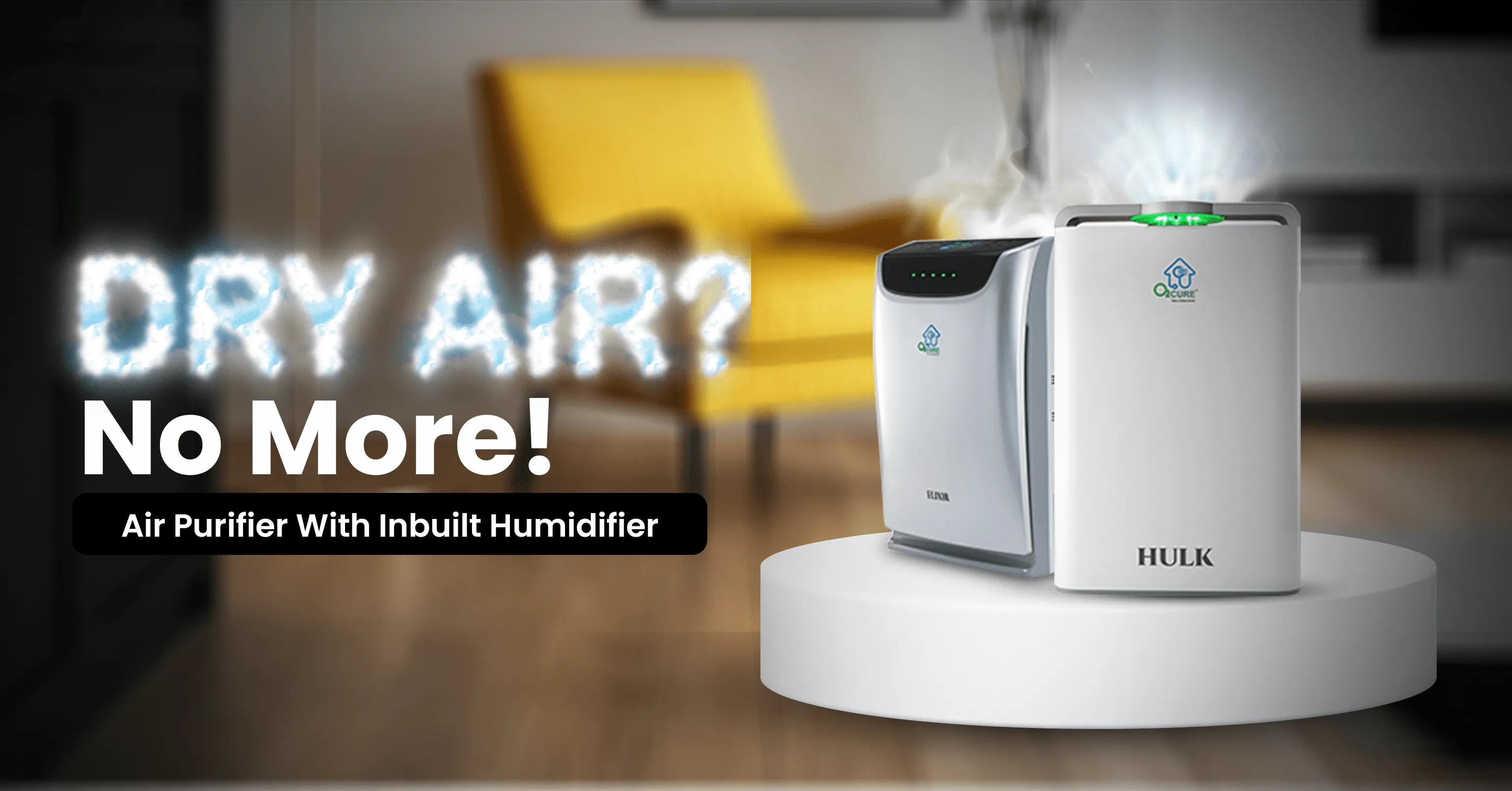
Air purifiers and room humidifiers serve different functions. An air purifier removes airborne pollutants such as dust, pollen, pet dander and smoke. A humidifier adds moisture to the air. Both can work together to improve indoor air quality. There are air purifiers available that have an inbuilt humidifier, such as the Hulk and Elixir air purifiers from O₂Cure.
The ideal indoor humidity level is between 30% and 50%. Use distilled water in your humidifier to prevent bacterial growth, clean it regularly, and monitor humidity levels with a hygrometer to avoid over-humidification.