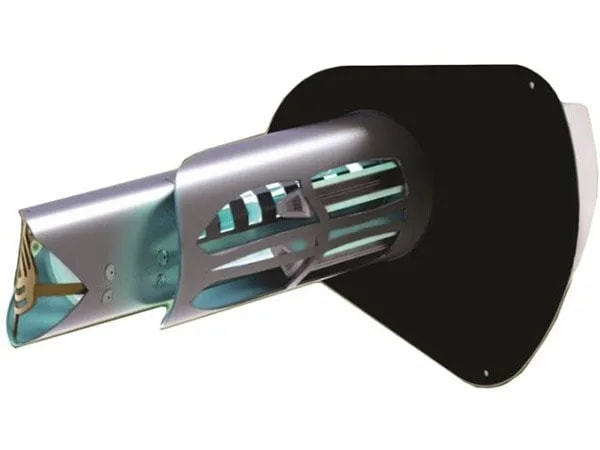
Photohydroionization (PHI) is an advanced oxidation technology developed by RGF Environmental Group. It works by exposing a broad-spectrum UV light source to a hydrated catalyst, producing ionized hydrogen peroxide (H₂O₂) molecules — also called Hydro-Peroxides — that are distributed throughout the conditioned space.
Unlike conventional filtration, which only treats air that passes through the filter, PHI technology produces an active purification field that works throughout the room — on surfaces as well as in the air. This makes it particularly effective against pathogens that have settled onto surfaces.
The REME HALO® is RGF's whole-home in-duct version of the technology, installed into the HVAC system. The PHI-Cell® is the standalone unit version, usable in spaces without central HVAC. Both are distributed in India through the O₂Cure range.
The 99.9% pathogen inactivation figure cited in RGF's testing refers to laboratory conditions under specific concentration and exposure parameters. This claim is sourced directly from RGF Environmental Group's published test data — O₂Cure presents it as the manufacturer's validated result, not as an independent O₂Cure claim.
PHI technology is best understood as a complement to, not a replacement for, HEPA and activated carbon filtration. A complete indoor air quality system addresses the full spectrum: particulate removal (HEPA), gaseous pollutant adsorption (activated carbon), and active pathogen inactivation (PHI or UV-C).